Monday, October 28, 2013

On the Way to El Brujo

The western side of the Andes is rather arid.
I much prefer the mountainous region with it's flora.
Click HERE for a map of the vegetation zones.


Large commerce.
(Irrigated fields)


Small commerce.


Tuesday, October 1, 2013

Port of Salaverry, Peru

Sailing south, the next port was Salaverry, Peru, near Trujillo.
Not only can this port accommodate large ships, but it provides an opportunity for those wanting to visit Machu Picchu region for 2 nights and rejoin the ship when it arrives in Callao (port for Lima) for an overnight stay.


Next: Road trip to archaeological sites.

(I have not been adding to this blog as frequently as I would like, or visiting your blogs--due to a challenge I made with a couple of my applique friends. In other words--I have been stitching too much!?!)

Sunday, September 22, 2013

Montecristi, Ecuador

Historic train


Demonstration of authentic hat making techniques.
The genuine Panama hat has it's origins in Montecristi, Ecuador.


The hat makers generally work to weave the toquilla straw strands for up to one hour at a time before resting.


The following are additional steps to be accomplished after the hat is woven.


 The value of the hat is determined by the fineness of the fiber woven into the hat, as well as the design, the exactness of the construction, etc. It is said that the gentleman who is the premier hat maker does his work late at night, so that the fiber does not dry out as quickly. Depending on the maker, the hats can sell for between $20 and $1200, or even more.


Manta, Ecuador, is the home of the Bototagua button making factory. The buttons are made from  corozo (vegetable Ivory or Ivory nut) and from coconut. The corozo can only be found in Ecuador (and parts of Columbia) I understand.


Thursday, August 29, 2013

How to Make a Coffee Bean Bag (Ecuador)

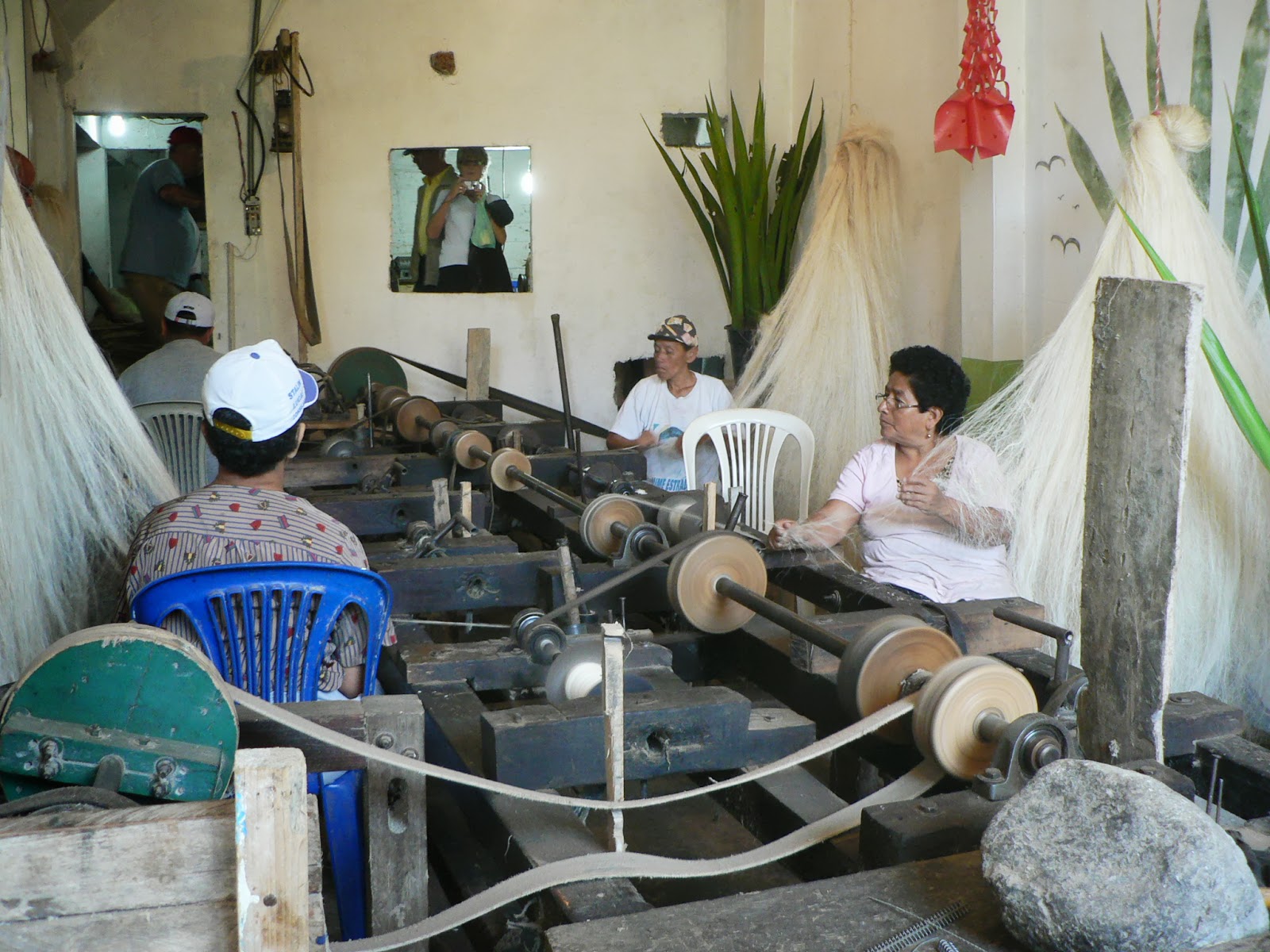
In a little village near the coffee production plant, they still make special bags to store the beans.

Small market outside the bag manufacturing area.

These vendors (as we discovered in all of South America) were very polite and unassuming.


Preliminary cutting of the large leaves used in the process.


This woman was in perpetual motion as she dragged the prepared strands over the nails to make them even finer. (This explains the blurry photograph!)


After the strands were put through the nail routine, they were brought to this room for further processing to convert the strands into twine.


View from the other end of the room.


Then the twine was loaded onto spools and transferred to another room where they were woven into cloth by a gentleman working this loom. The weaving process was particularly labor intensive.


After the man finished the weaving process, another person stitched the cloth together to form a coffee bean bag.


Next:  Visiting the makers of "Panama" hats in Miraflores, Ecuador.

Monday, August 19, 2013

Manta, Ecuador

The port of Manta, Ecuador, has easy access for large cruise ships.
It is home to a large tuna fishing fleet.
Ecuador is home to a large American expat population.
We were told the primary export is:  flowers.

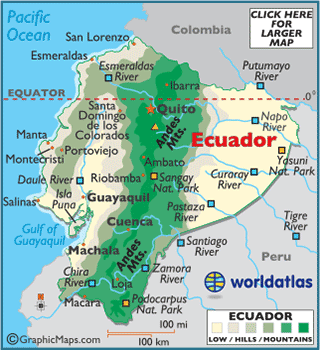
(Graphic Maps.com photo)

Views of the port area


Driving into town 


Taxi queue?


Driving into the countryside
Temperature -- 21 C
Quite arid.


Thursday, August 15, 2013

Panama City, Panama

After we left the Panama Canal and entered into the Pacific Ocean, we headed south to Manta, Ecuador, passing Panama City.  We didn't have an opportunity to stop and visit (this time).

Click on photos for a much larger view!


This is the new Getty Museum!
Thanks, Jim O'Donnell for updating me!


I love the contrast--architecture and clouds.


Very intriguing!


Another favorite


Tuesday, August 6, 2013

Panama, Bridge of the Americas

Located at the Pacific Ocean approach to the Panama Canal, the Bridge of the Americas provided an easier access to cars traveling on the Pan American Highway, replacing the Thatcher Ferry.


35,000 vehicles cross the Panama Canal each day on the Pan American Highway.  It boggles the mind to think of having to use a ferry system now. Leaving the Panama Canal, if you sail to the north (turn right) you will be heading towards Acapulco, Los Angeles, and San Francisco.

If you turn left, you will be sailing south to South America. That is where we will be going!