When we returned from the western cliffs to our ship in the harbor, we were surprised to learn that during our absence, the Queen of Denmark, Margrethe II, had arrived in her royal yacht. (On the left, with flags)
Showing posts with label Faroe Islands. Show all posts
Tuesday, August 24, 2010
Time to Return to Torshavn
Another beautiful sea cave
Boat houses, Vestmanna
Army headquarters. Since the military has been disbanded, this sod-roofed property is now for sale, we were told.
Sheep may rule the islands, but there are other livestock as well.
Boat houses, Vestmanna
Army headquarters. Since the military has been disbanded, this sod-roofed property is now for sale, we were told.
Sheep may rule the islands, but there are other livestock as well.
More Vestmanna Cliffs
The wave action over the centuries has carved tunnels into the rock formations. We were able to access these with the small boat. (We were provided with helmets, in case a boulder came crashing down.)
Vestmanna Western Cliffs
The western side of the Faroe Islands have been pelted by centuries of intense weather. The cliffs are very steep, but covered with edible grass for the sheep. One wonders how the sheep can keep from falling into the sea. They share their space with a variety of birdlife who nest in the cliffs. This is a very scenic area.
Monday, August 23, 2010
Faroe Islands -- Vestmanna to the Cliffs
Sightseeing boat to the cliffs
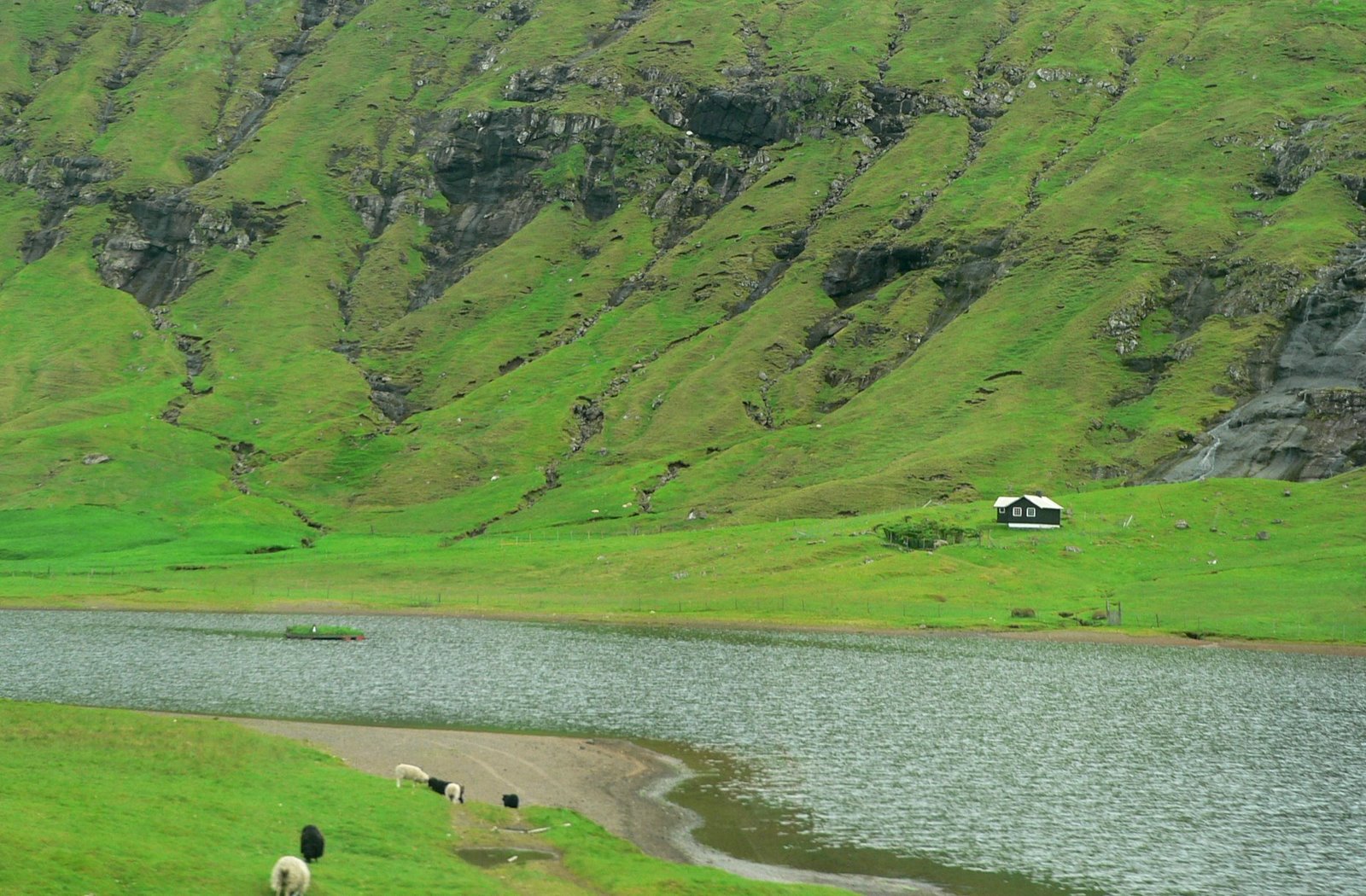
Remote building near a deep ravine. The face of these mountains are very steep. They send the sheep here to graze. The quality of the meat is superlative to any lamb worldwide, we were told. It is quite a challenge rounding up the sheep as winter approaches.
Abandoned community near the opening to the sea.
Faroe Islands--On the Way to Vestmanna
Fjord-side village
Sod roofs
Cozy village built where ages old glacier fed into the ocean.
Vestmanna harbor
Sunday, August 22, 2010
Faroe Islands -- Scenes
When you don't have much vegetation, you create interest by using varied colors.
Country home and Faroe Island sheep. Later, I will show some very steep hills where the sheep graze during the summer. Because of the distance, the sheep are hard to see.
Tunnel through the mountains. The driver took another route back (so he wouldn't have to pay the tolls.)
Always remember to bring a lightweight raincoat to the Faroe Islands. The weather can change very rapidly. I love the Faroe Islands cloud formations.
Saturday, August 21, 2010
Torshavn, Faroe Islands, June 30, 2010
The Faroe Islands are located midway between the Scottish Shetland Islands and Iceland. This is a view of the protected port of Torshavn from a hill overlooking the harbor. The Ocean Princess is the larger of the two ships (on the right).
Friday, July 9, 2010
Faroe Islands, June 30, 2010
Proceeding, without photos for now. (I will add photos when I have access to my other laptop on August 1st or later.)
When you visit Torshavn (pronounced Tor-shawn by the locals)it makes good sense to bring a lightweight raincoat with you. The weather can change dramatically and quickly. We lucked out. I had forgotten the Faroe Islands rain gear, but the weather was quite decent. Last time we visited the island, we had seen the National Historic Museum and the town of Kirkjubour, home of the 12th Century St. Olaf's parish church, the ruins of the 13th Century St. Magnus Cathedral, and 10th Century farmhouse.
We traveled by motorcoach to the town of Vestmanna and boarded a boat to explore the western cliffs. The sea cliffs are riddled with sea grottoes and are home to hundreds of seabirds (puffins, kittiwakes, and stormy petrels. We saw most of the birds (except for the illusive puffin, my favorite). The boat was able to pass through some of the caves in the 1800 foot cliffs. We passed a small village which had been abandoned by the residents when the demands of living there became too great. I recalled many of the same types of villages still used by the hearty Norwegians along the rugged coast of Norway.
When you visit Torshavn (pronounced Tor-shawn by the locals)it makes good sense to bring a lightweight raincoat with you. The weather can change dramatically and quickly. We lucked out. I had forgotten the Faroe Islands rain gear, but the weather was quite decent. Last time we visited the island, we had seen the National Historic Museum and the town of Kirkjubour, home of the 12th Century St. Olaf's parish church, the ruins of the 13th Century St. Magnus Cathedral, and 10th Century farmhouse.
We traveled by motorcoach to the town of Vestmanna and boarded a boat to explore the western cliffs. The sea cliffs are riddled with sea grottoes and are home to hundreds of seabirds (puffins, kittiwakes, and stormy petrels. We saw most of the birds (except for the illusive puffin, my favorite). The boat was able to pass through some of the caves in the 1800 foot cliffs. We passed a small village which had been abandoned by the residents when the demands of living there became too great. I recalled many of the same types of villages still used by the hearty Norwegians along the rugged coast of Norway.
Subscribe to:
Posts (Atom)